Project Frame Convening at NYCW 2026: Assessing Adaptation Impact
The Project Frame Convening at New York Climate Week (NYCW) 2026 was a resounding success! The event brought together early-stage private investors to network over lunch and discuss adaptation and resilience (A&R) impact measurement.
First and foremost, thank you to Foley Hoag for being amazing hosts and sponsors. Special thanks to Sarah Main, Partner in their Energy & Climate group, for welcoming everyone and supporting the ecosystem.
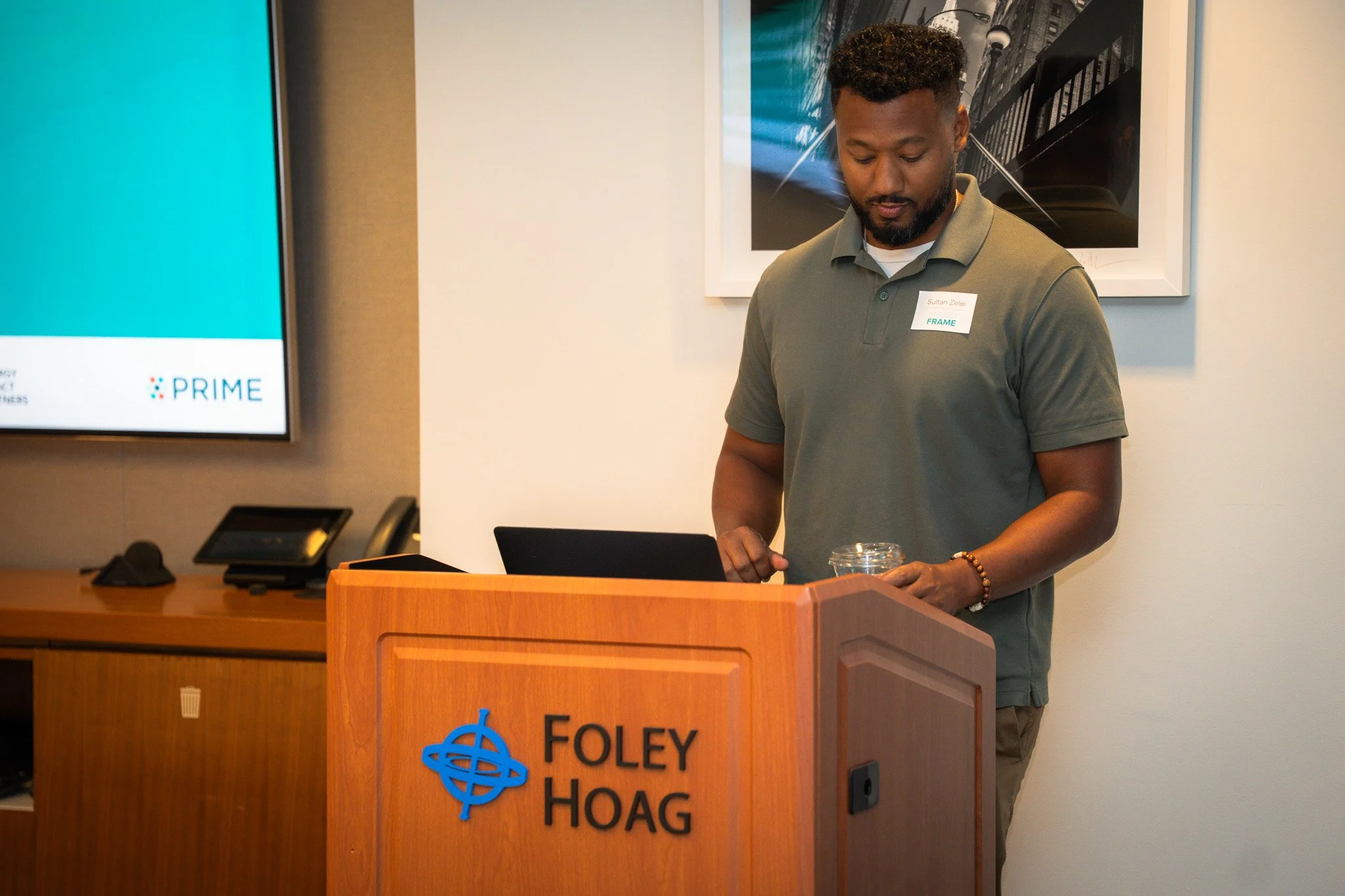
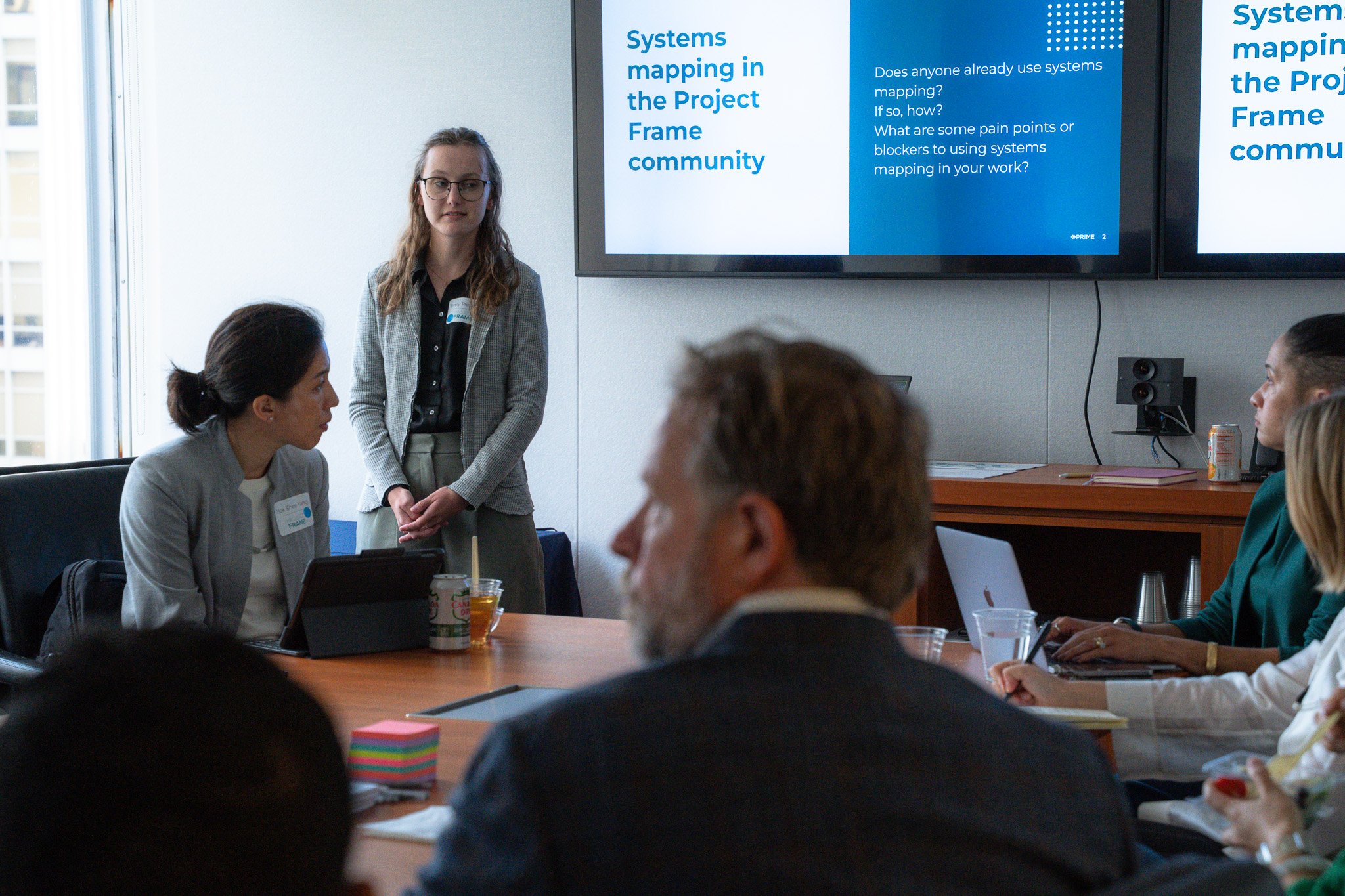
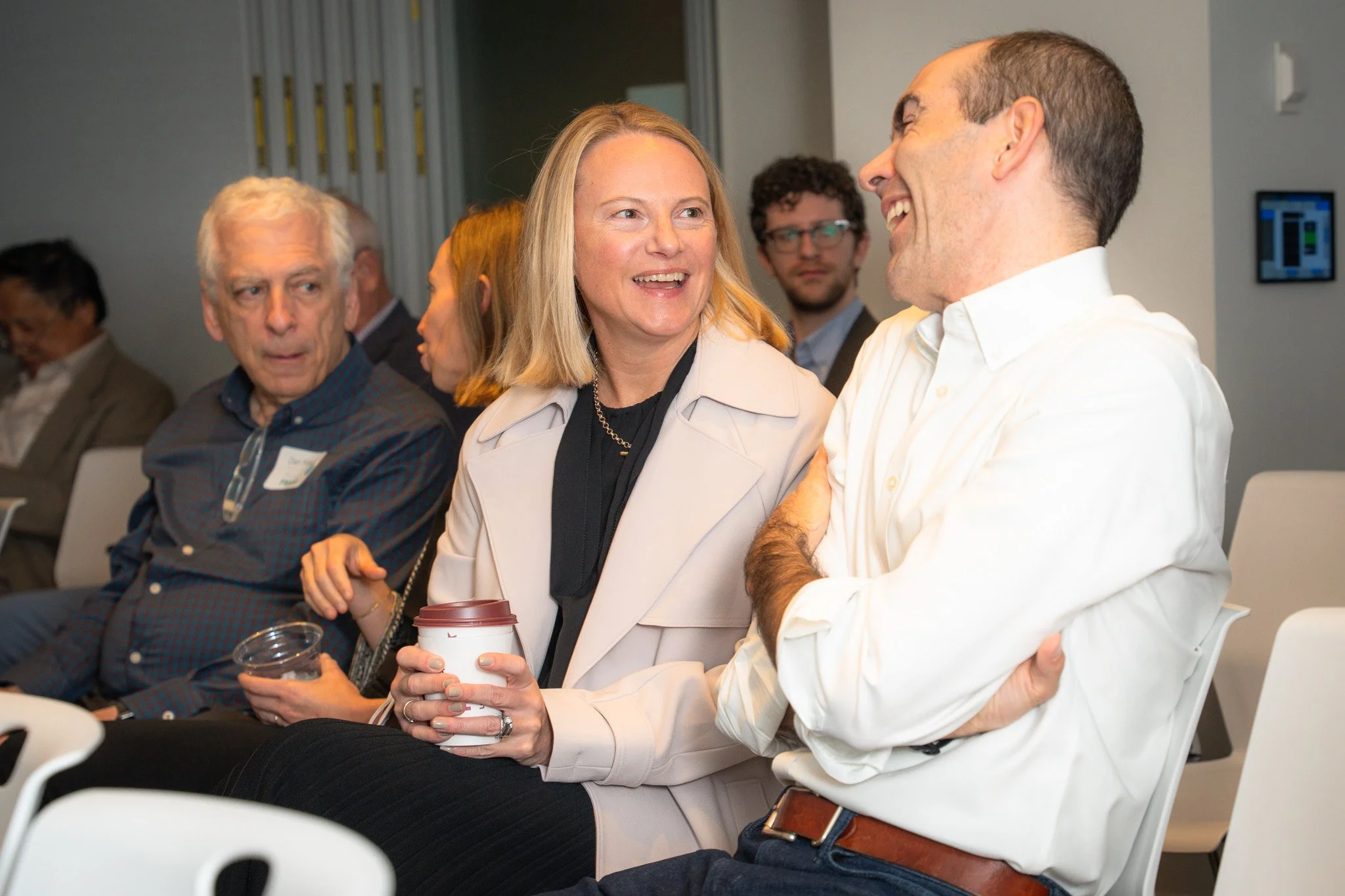
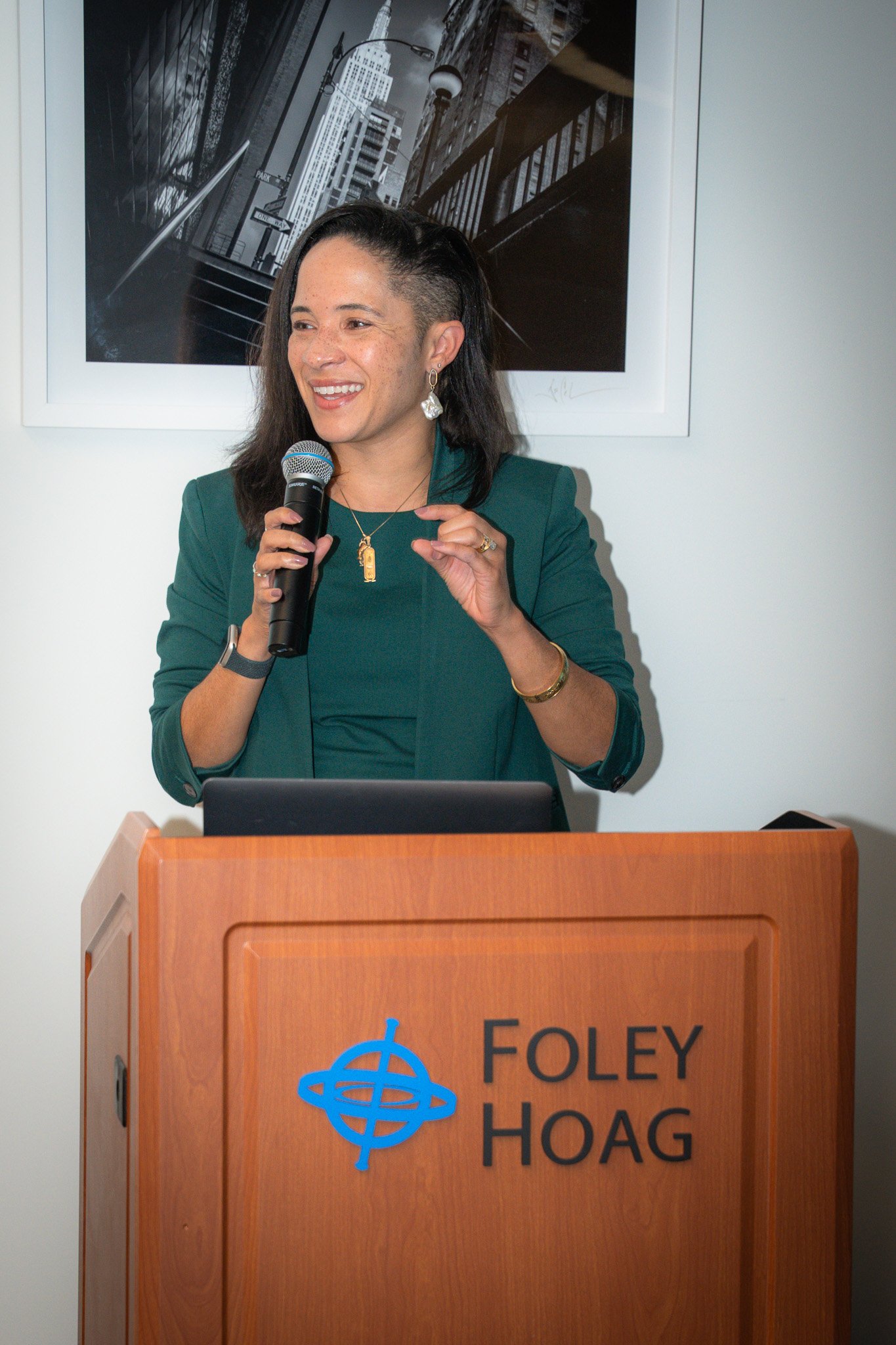
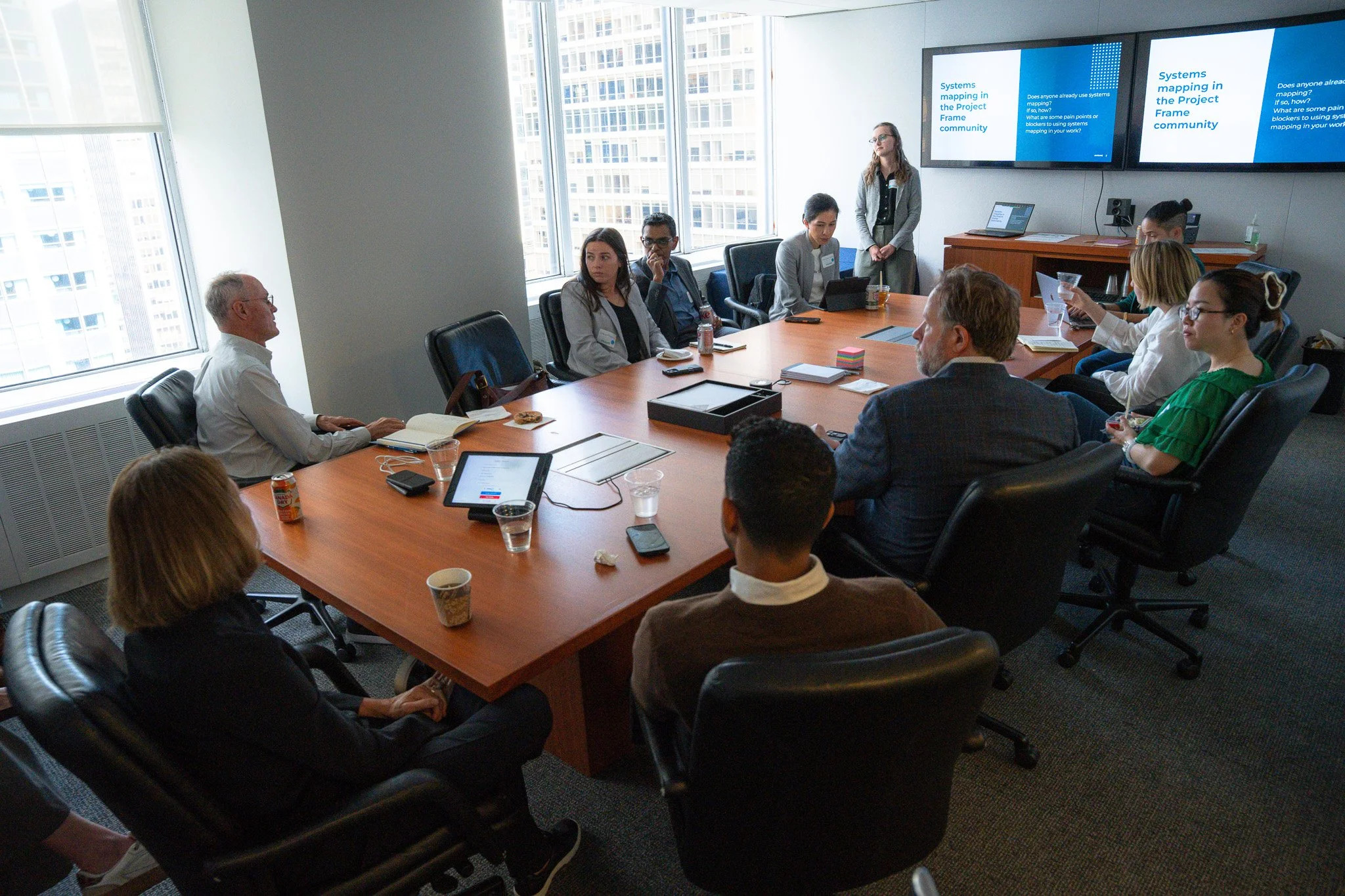
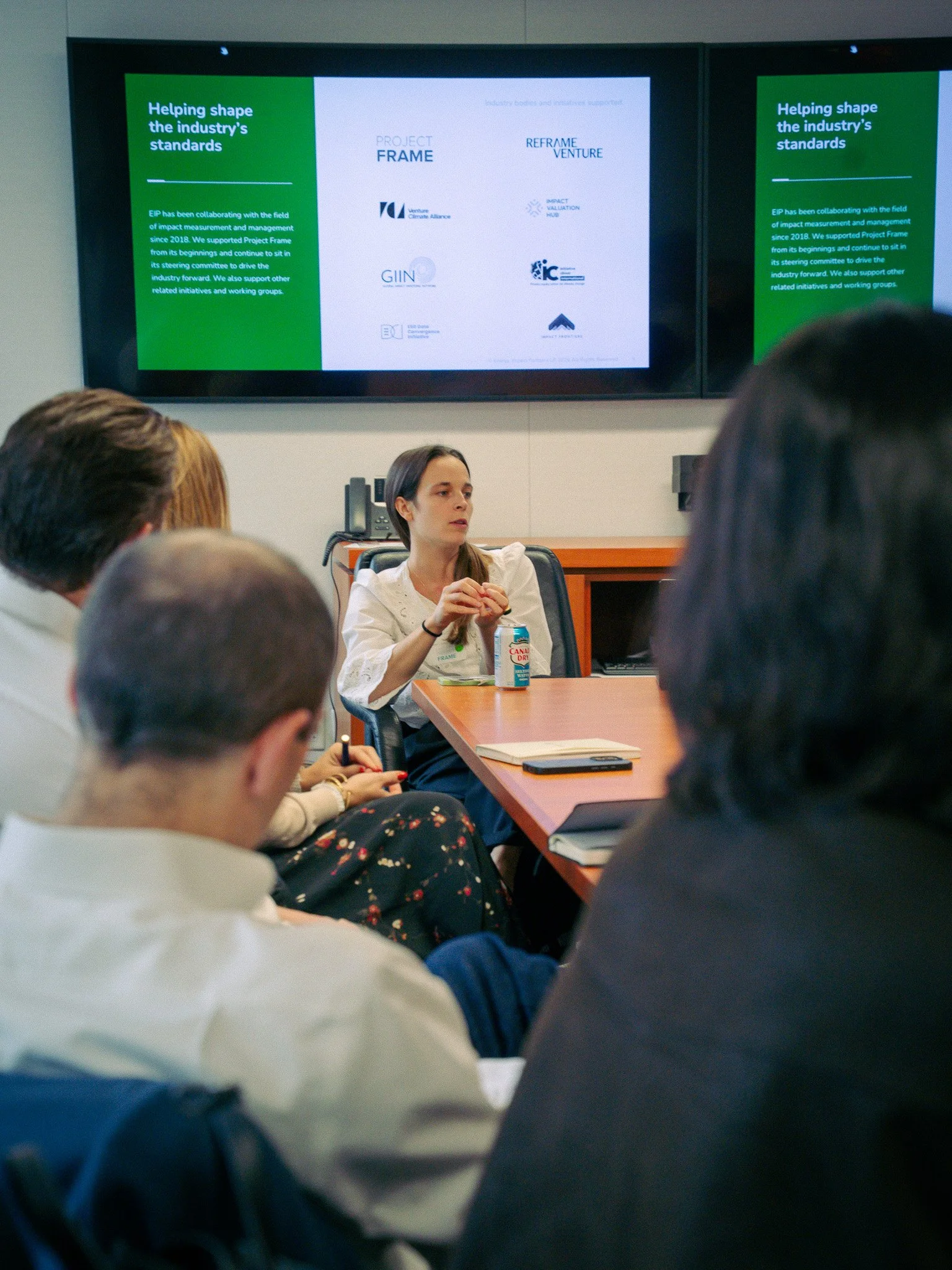
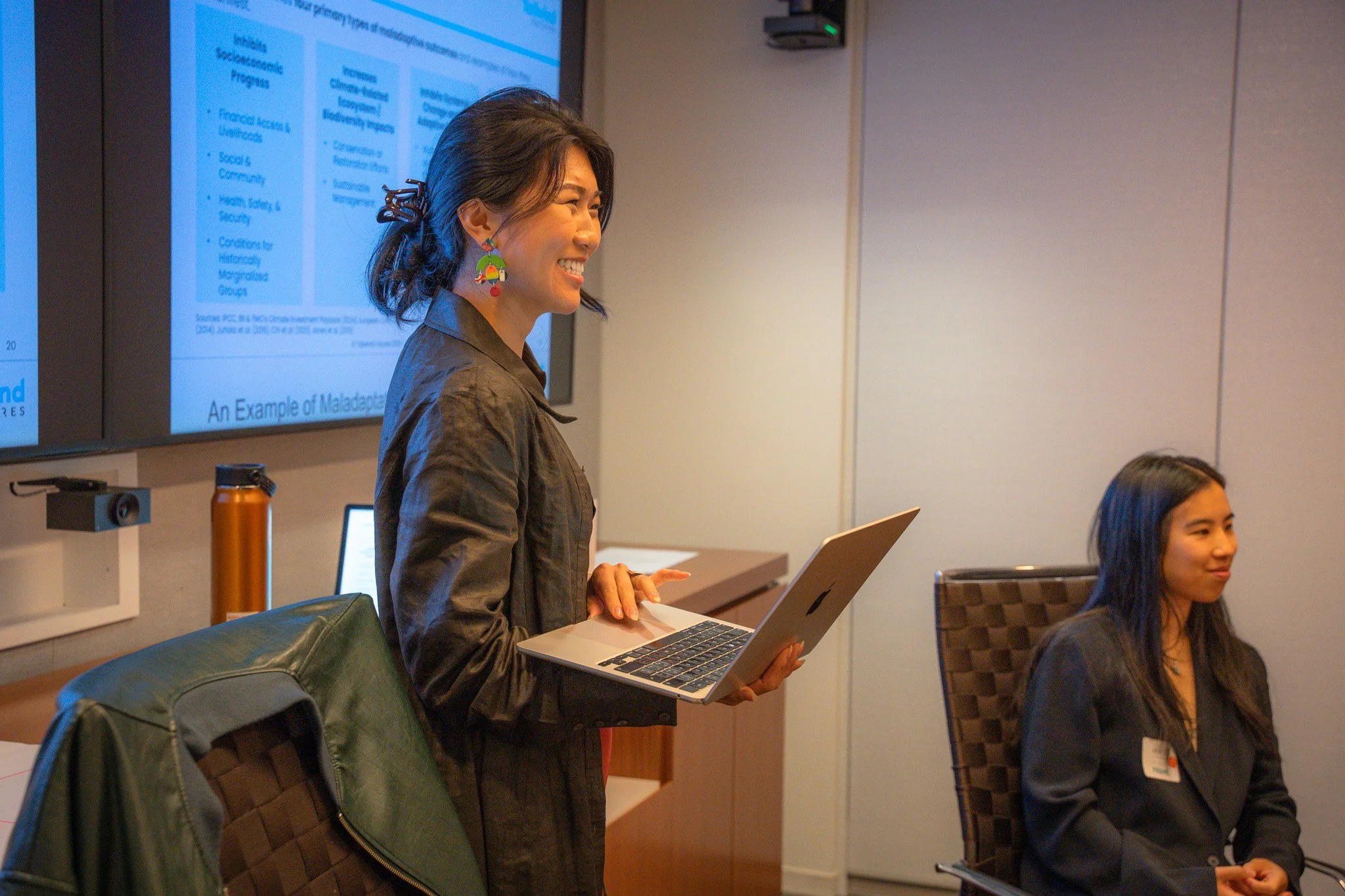
Here is a recap of the day's key moments:
Opening Statement
Keri Browder kicked off the day by introducing Project Frame and Prime Coalition. She highlighted Prime's core programmatic strategies: Catalytic Investing and Knowledge Sharing, with Project Frame serving as its flagship Knowledge Sharing program.
Emphasizing impact accountability, Prime’s goal is to influence the climate investing ecosystem to move away from impact investing that appears flashy or trendy—investments that appear to do more good than they might in reality. Instead, the focus must be on measurable and accountable impact strategies that can advance untapped climate solutions with speed and scale.
The core mission of Project Frame, updated in 2026, is to accelerate the climate transition by creating community, alignment, and accountability in impact assessment for climate solutions investing.
About the Case Studies Working Group
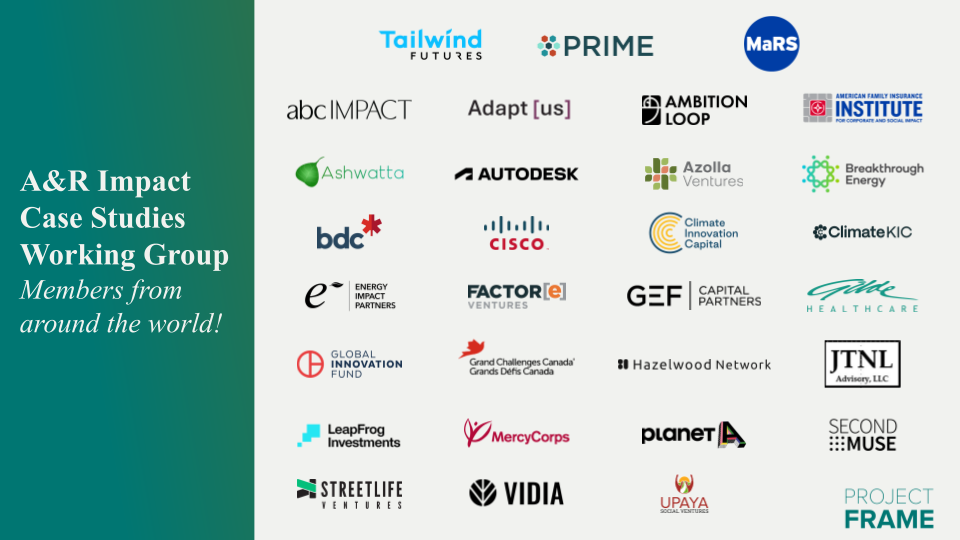
The Case Studies Working Group is a partnership with Prime Coalition as the facilitator, the MaRS Adaptech Accelerator as the startup liaison, and Tailwind Futures as the A&R technical lead. Tailwind is a strategic venture fund focused on climate adaptation & resilience technologies.
This working group kicked off in June 2026 and is meeting monthly for 6 to 9 months. The primary goals of the working group are to bring together early-stage private investors in A&R to create a framework–building off existing work in the field–for measuring the impact of adaptation and resilience companies, apply this framework to specific adaptech startups like NOAH Intelligence and ZS2 Technologies, and ultimately share this framework and lessons learned with the broader A&R ecosystem to build upon. This is not yet an official Project Frame methodology, but will give us a starting point as we develop it in 2027 and beyond.
The working group consists of a diverse set of subject matter experts across climate finance, insurance, consulting, and impact measurement. Their time, expertise, and openness to collaboration make this work truly valuable.
Framework Overview
Brooke Zhang, Investment Manager from Tailwind Futures, presented the draft Case Study Framework. Brooke outlined the working group's goals to create an impact measurement framework for early-stage A&R companies.
The framework aligns with existing standards like IRIS+, Global Goals on Adaptation, Sustainable Development Goals, and Impact Frontiers and evaluates metrics across four tiers:
Baseline Risk
Outputs
Outcomes
Impact
Metrics inform choices from pre-investment screening to post-exit portfolio aggregation, guiding decision-making across the entire investment lifecycle.
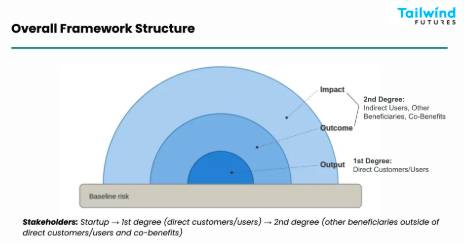
A clear measurement framework for A&R is essential because it transforms vague climate goals into concrete, comparable data that unlocks private capital. Fixing metric gaps and bridging policy and practice are crucial for widespread adoption of IMM best practices.
Ultimately, the framework will help impact investors prevent greenwashing by delivering and reporting on genuine resilience outcomes rather than surface-level claims.
Breakout Sessions
Following the main presentations, attendees split into three insightful breakout sessions
Prime Coalition (Led by Emily Prebihalo)
This session focused on "Systems Mapping for Adaptation and Resilience." Prime introduced its method for holistically mapping boundaried systems to identify leverage points for catalytic capital orchestration.The group tackled challenging questions about the application of systems mapping to various forms of impact investing. Insights emerged around the critical need for diversity of perspectives during the research phase and how investors must consciously avoid reinforcing flawed or broken systems.
Tailwind Futures (Led by Brooke Zhang)
Building on the main presentation, this deep-dive explored how investors can proactively identify and mitigate maladaptation risks (unintended negative consequences that can arise when deploying adaptation solutions), and how they can integrate maladaptation risk diligence into their investment & impact measurement process. The collaborative discussion noted that while this topic has been studied across academia and the public sector, the new Maladaptation Diligence Toolkit that Tailwind published translates that complex work into actionable guidance for the rapidly growing community or private A&R investors. It also made clear that maladaptation risks, when identified early, are frequently manageable and addressing them can ultimately improve the solution and investment outcomes. Participants discussed real-world examples they’ve come across in their own work as investors, lawyers, impact measurement experts, and founders and concluded that maladaptation is not intrinsic to a technology but rather depends heavily on context such as geography, socioeconomic factors, time scales, and beyond.
Energy Impact Partners (Led by Natàlia Costa i Coromina and Javier Luna)
EIP shared its approach to A&R from an energy transition perspective, drawing from its experience across 150+ investments. They shared the complexities of assessing "foundational impacts" where a company is just one piece of a broader system. Through group discussion, attendees converged on a shared desire: that GPs not be forced to overengineer a company's impact into an avoided-emissions framework when it's better assessed through other metrics. The key takeaway was the importance of focusing first on realized outputs and collecting multi-year data before making broader forecasts or impact attributions, emphasizing that market-wide alignment is essential to hold the ecosystem accountable.
Thank You to Our Attendees
We want to extend a massive thank you to all the attendees who joined us. Your participation, engagement, and willingness to tackle these complex challenges head-on are exactly what make the Project Frame community so impactful.
Bringing this community together is vital as we work to align, define, and scale adaptation and resilience impact measurement across the industry. We couldn't push the boundaries of climate accountability without your ongoing dedication and collaboration!